
The Elements and Principles of Design
- Oct 29, 2017
- 2 min read


The Elements and Principles of Design are key components to consider when creating an ensemble. These are the most important ingredients when creating the recipe for the perfect look. When applying the elements and principles, it improves and enhances your experience in finding an excellent balance between the two. The principles of design consist of balance, proportion, emphasis, rhythm, and unity. The elements of design consist of color, shapes, line, texture, and form. The ten pieces are what create an attractive outfit. In this article, I will elaborate on what each one means and how essential they are to creating the perfect look!
First let's start with the Principles of Design: Balance, Proportion, Emphasis, Rhythm, and Unity. The principles of design are what draws the viewer's attention. This displays the most significant parts of the ensemble and helps organize the outfit.
1. Balance: This principle creates an equilibrium and stability for the outfit. The designs appears to look visually weighted.
2. Proportion: The harmony of the ensemble is connected as a whole.
3. Emphasis: A concentration of interest or the focus of a particular area of the design.
4. Rhythm: A pleasing arrangement of the design that creates easy movement for the observers eye.
5. Unity: The combination of all of the elements working together to create harmony in the design.
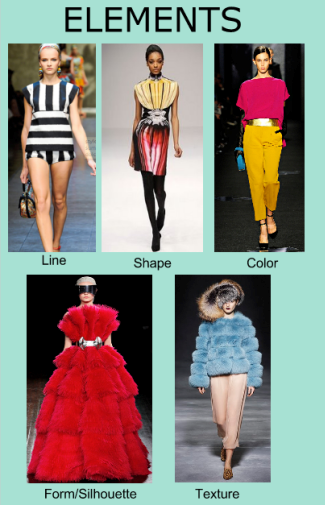
Second (and lastly), the Elements of Design: Color, Shape, Line, Texture, and Form. The elements of design are somewhat described as the ensembles shapes. These elements help add the details and illusions to an outfit.
1. Color: How people interpret the hue, the brightness, and the saturation (what it can be absorbed, or combined, with) of it.
2. Shape: A two- dimensional figure, sometimes referred to as a silhouette, usually separated by a defined boundary.
3. Line: The length of a curvy or straight line that guides the eye through the design.
4. Texture: How the material, or surface, looks and feels. It displays the quality of the design.
5. Form: A three-dimensional object that displays the design.
Altogether, the elements and principles of design are crucial parts of creating a design. Many people often ask what the difference between the two are and why it is important. The difference between the two are that the elements of design are all about the rhythm, or movement, when repeating one or more of the elements. However, the principles of design add variety to the elements. It adds a different interest and quality of light to the design.
This brings us to the question, "Why is this important?". These elements and principles allow an artist to create their work and add specific detail to it. Like I said before, this is a crucial part of the design process. A single step cannot be skipped when creating a work piece. These go from basic steps to major details and always add more. You cannot have color without proportion. You cannot have line without rhythm. You cannot have form without balance. The list goes on and on but it's just to prove how significant each piece is to the design.
Sincerely Yours, Ciel.
Comments